
Setting up an online storefront is only the beginning of your entrepreneurial journey. Once your website is live, driving traffic is crucial, but converting that traffic into repeat customers is where the real growth happens. While social media and paid advertising are great for visibility, automated email marketing remains one of the most cost-effective channels for securing consistent sales.
Automated email sequences, also known as flows, work silently in the background to nurture leads and win back lost revenue. By utilizing the best tools for print on demand, you can easily integrate these automated campaigns with your existing platform. Let us explore the five essential email flows your business needs to set up today to maximize conversions.
1. The Welcome Email Flow
First impressions are incredibly important in the digital space. When a visitor signs up for your newsletter, they are showing immediate interest in your brand. A welcome flow should initiate contact within minutes of subscription.
This sequence should introduce your brand story, showcase your unique design process, and offer a small incentive like a discount code to encourage their first purchase. It sets the tone for your communication style and begins building a trusting relationship with your audience.
2. The Abandoned Cart Flow
Cart abandonment is a major challenge for online retailers. Many users add custom apparel or home decor to their shopping cart but leave before completing the checkout process. An abandoned cart sequence acts as a timely reminder to bring them back.
Sending a series of two to three emails reminding customers of their pending items, highlighting your customer-friendly return policies, or providing a limited-time discount can significantly boost your overall pod conversion rate.
3. The Browse Abandonment Flow
Not everyone who visits your store will take the step of adding products to their shopping cart. Some visitors will simply browse your collections and exit the website.
A browse abandonment flow targets these warm leads based on the specific designs or items they viewed. For instance, if they spent time viewing your best selling print on demand products, you can send an automated message featuring those exact items alongside similar design recommendations.
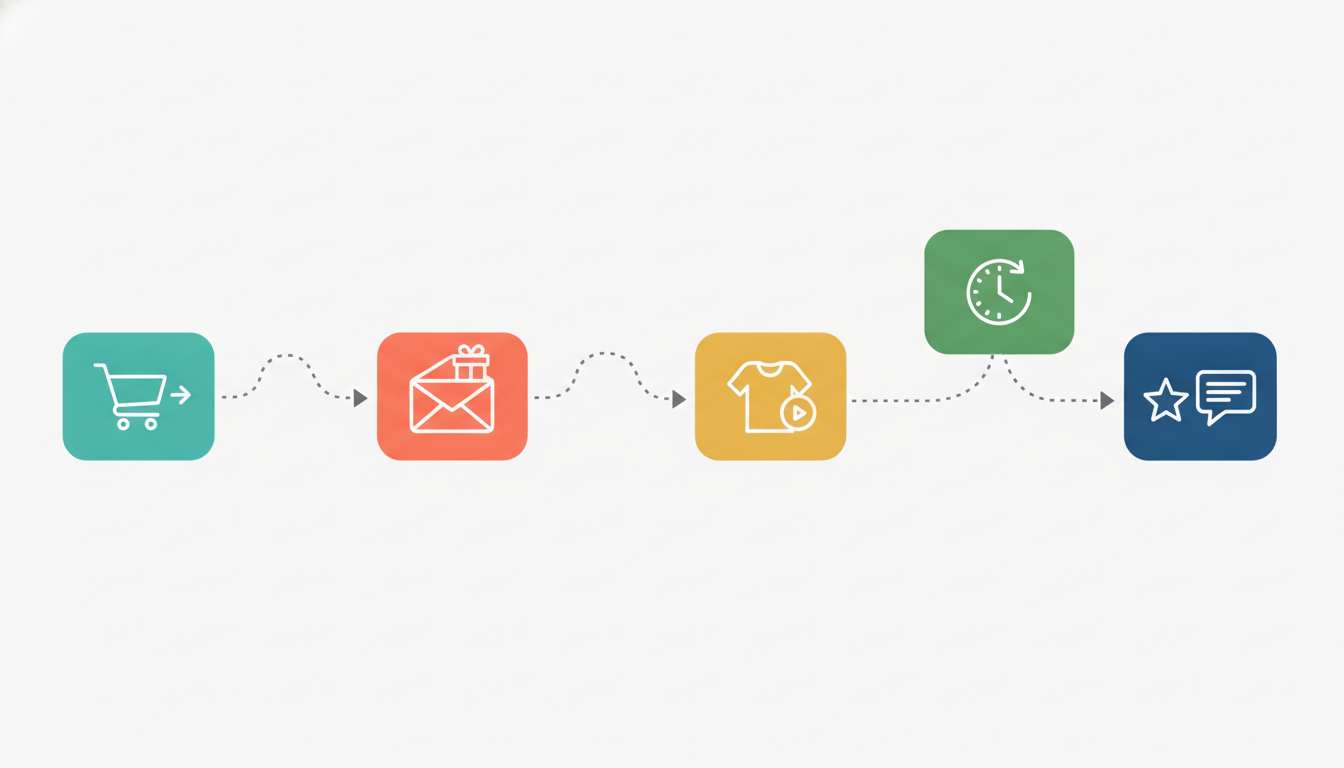
4. The Post-Purchase Flow
The customer journey does not end when a purchase is finalized. In the world of e-commerce, cultivating customer loyalty is far more cost-effective than constantly trying to acquire new buyers.
A post-purchase sequence thanks the customer for their order, provides realistic production and shipping timelines, and requests feedback once the product arrives. It is also an ideal opportunity to suggest complementary products that match their recent purchase.
5. The Customer Win-Back Flow
Over time, some subscribers will naturally stop opening your newsletters or buying your products. Instead of letting them go, a win-back flow attempts to re-engage these inactive contacts.
This sequence typically launches after a set period of inactivity, such as sixty or ninety days since their last interaction. It offers a strong incentive, introduces exciting new product additions, or simply asks if they want to update their preferences, helping you maintain a healthy list.
Frequently Asked Questions
- How many emails should be in an abandoned cart flow?
An effective abandoned cart sequence usually contains two to three emails. The first should be sent within one hour of abandonment, the second twenty-four hours later, and a final reminder with a small discount after forty-eight hours.
- Do automated email flows require a lot of maintenance?
No, the main advantage of email automation is that once you set up the triggers and write the copy, the system runs automatically without requiring daily intervention.
- How often should I update my email sequences?
It is a good practice to review your email performance metrics every three to six months to update outdated product recommendations, refresh your graphics, and test new subject lines.
Conclusion
Implementing these five essential automated email flows allows you to build stronger relationships with your target market and secure passive sales. By mapping out these critical customer touchpoints, you ensure no revenue opportunities slip through the cracks, allowing your print on demand business to scale sustainably over time.