
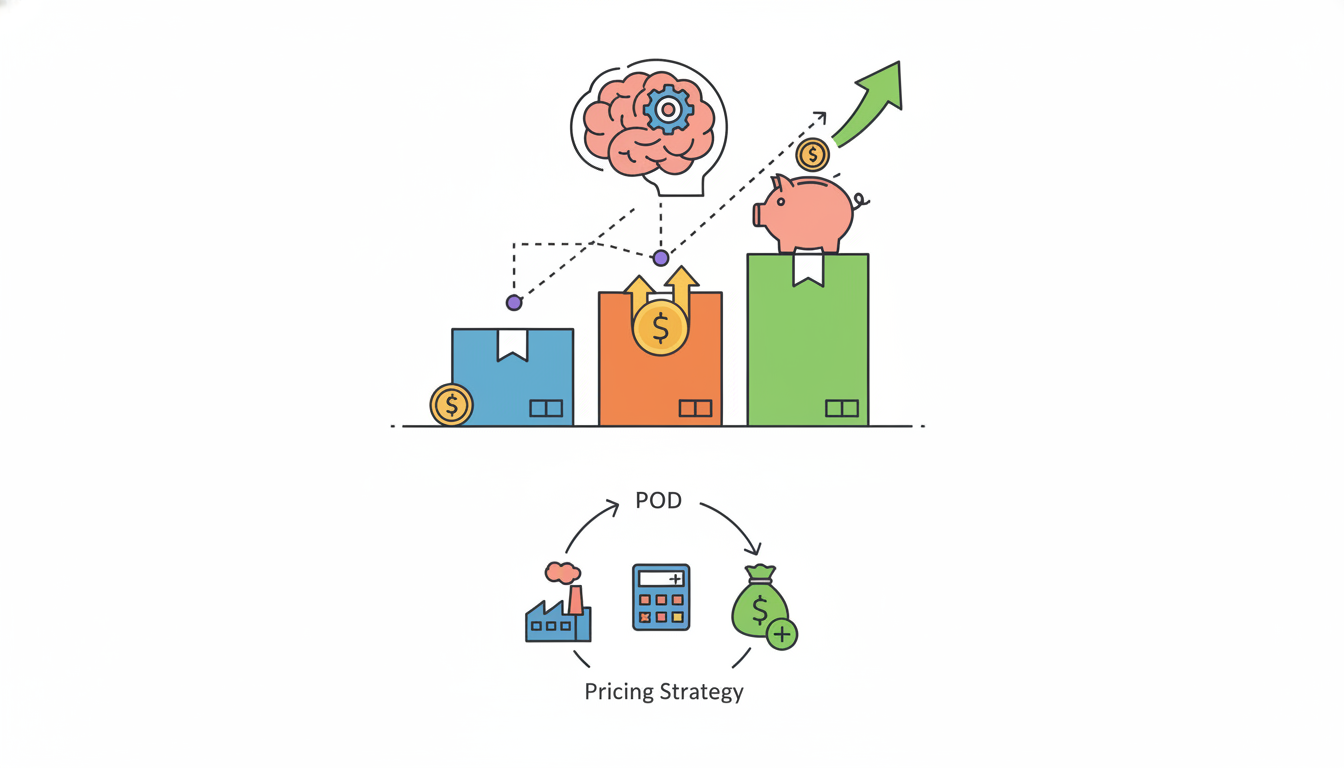
Setting up a print on demand business is an exciting journey, but one major hurdle many creators face is setting the right prices. Finding the sweet spot between attracting customers and making a healthy profit requires a strategic approach. If you price too low, you risk losing money. If you price too high, your customers might turn to competitors. Developing a solid POD pricing strategy is crucial for long-term viability in the competitive e-commerce landscape.
Understanding Your Base Costs
Before you can set a retail price, you must understand your total expenses. In print on demand, your costs are divided into several key areas:
- Base product cost: The price your POD provider charges you to print and supply the item.
- Shipping fees: The cost to deliver the product to the customer.
- Platform fees: Listing fees or transaction charges from platforms like Shopify or Etsy.
- Marketing expenses: The cost of running advertisements to drive traffic to your store.
Choosing Your Pricing Strategy
There are several established pricing strategies you can apply to your store to optimize your profit margin.
- Cost-plus pricing: This is the simplest method. You calculate your total cost of goods sold and add a set percentage or dollar amount as profit.
- Competitor-based pricing: You research what similar brands are charging and set your prices accordingly to remain competitive.
- Value-based pricing: You set prices based on the perceived value of your unique designs and brand authority, allowing for premium pricing.
Finding the Perfect Profit Margin
To ensure your business remains sustainable, aim for a healthy profit margin after covering all expenses. Most successful print on demand sellers aim for a retail profit margin between thirty to fifty percent. For example, if your total cost for a t-shirt is fifteen dollars, selling it for twenty-five dollars gives you a ten-dollar profit, which keeps your brand healthy and scalable.
Frequently Asked Questions
- How often should I adjust my prices?
You should review your pricing at least twice a year or whenever your POD supplier changes their base costs.
- Should I offer free shipping?
Yes, offering free shipping is a proven psychological trigger. You can simply increase your product price to cover the shipping cost.
- How do I handle discounts and promotions?
Build a buffer into your initial pricing strategy so that offering a fifteen percent discount still leaves you with a decent profit.
Conclusion
Mastering your POD pricing strategy is an ongoing process of testing and optimizing. By understanding your costs, analyzing your competitors, and pricing for value, you can build a highly profitable e-commerce brand that stands the test of time.